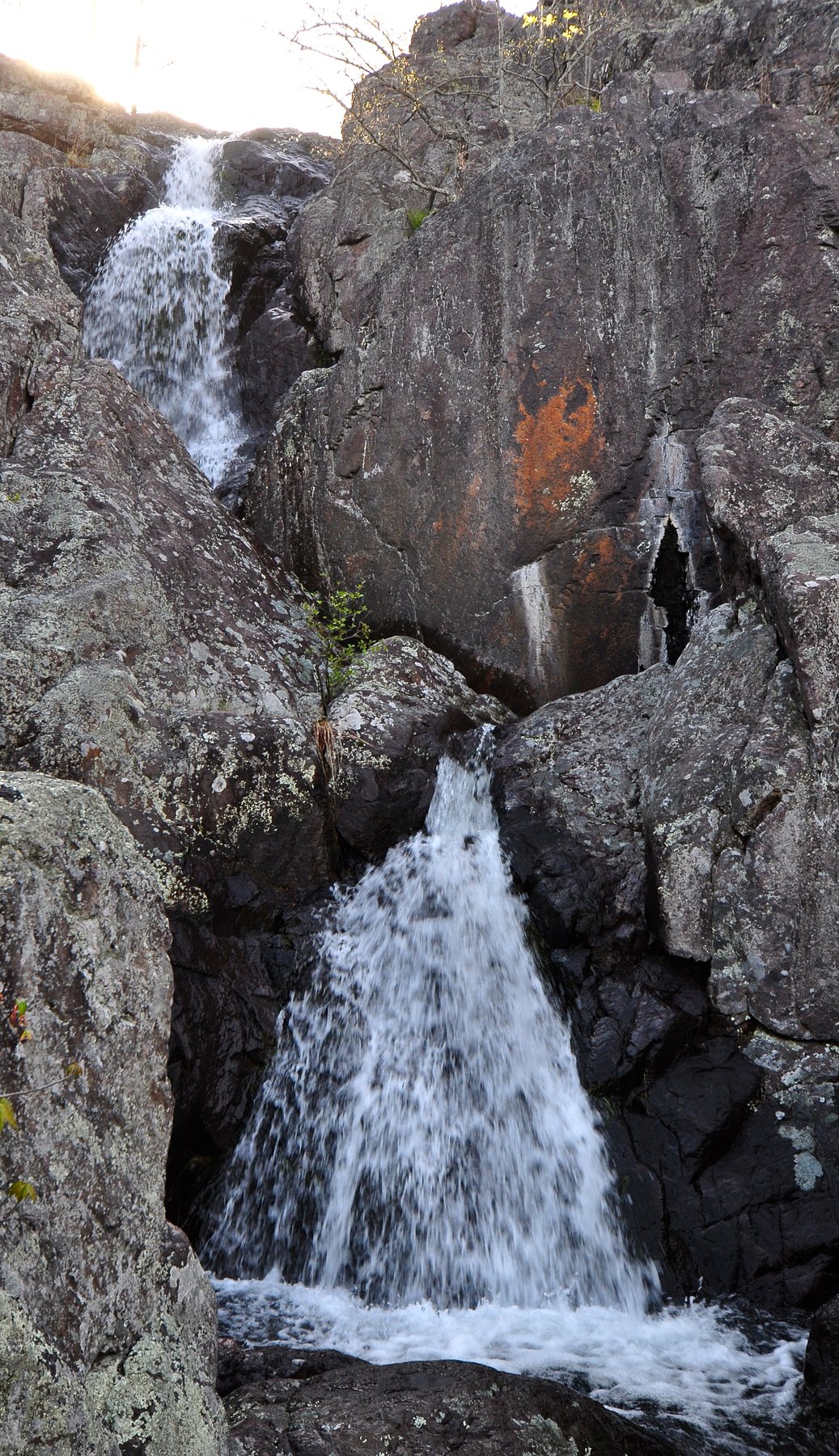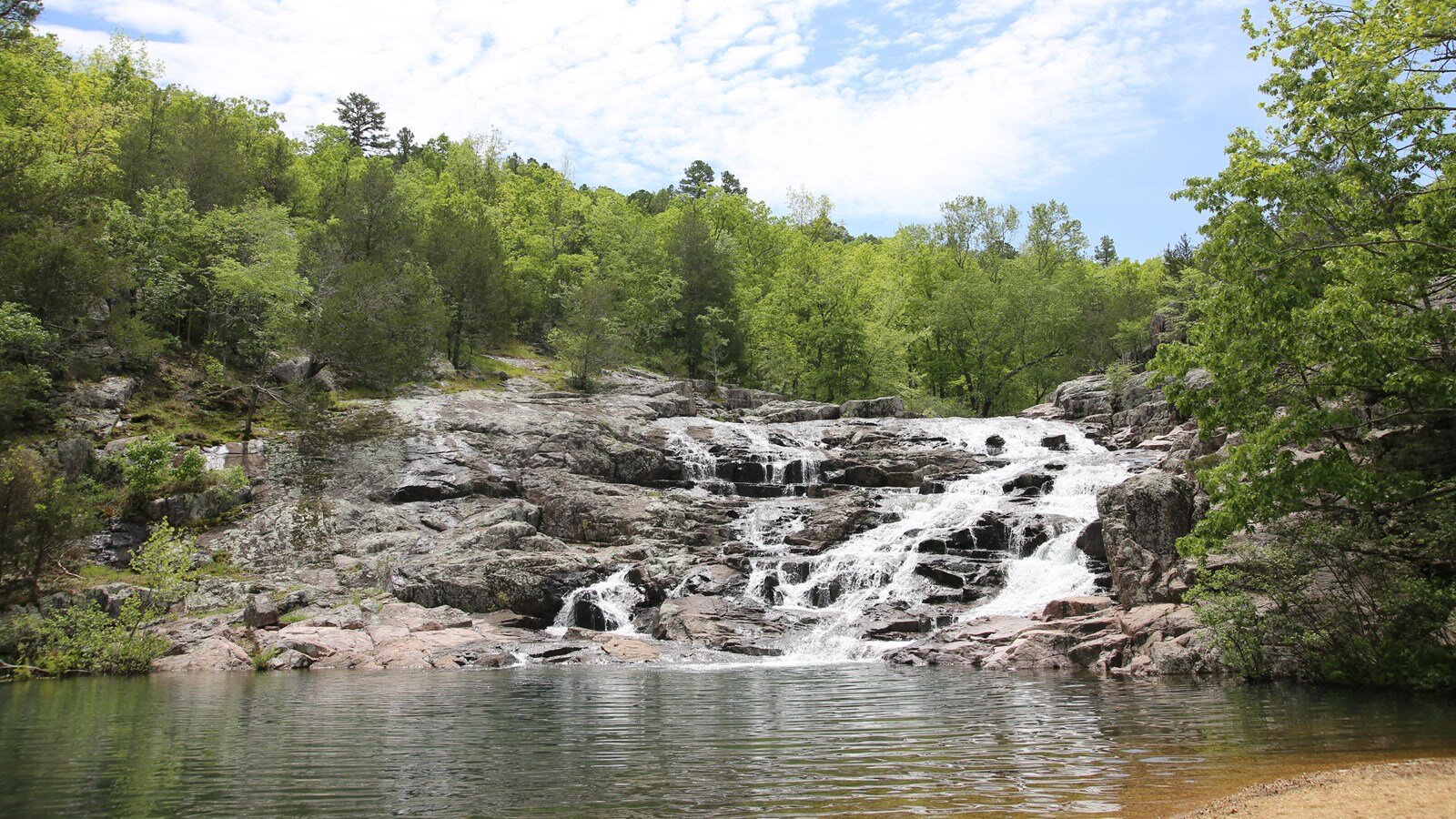
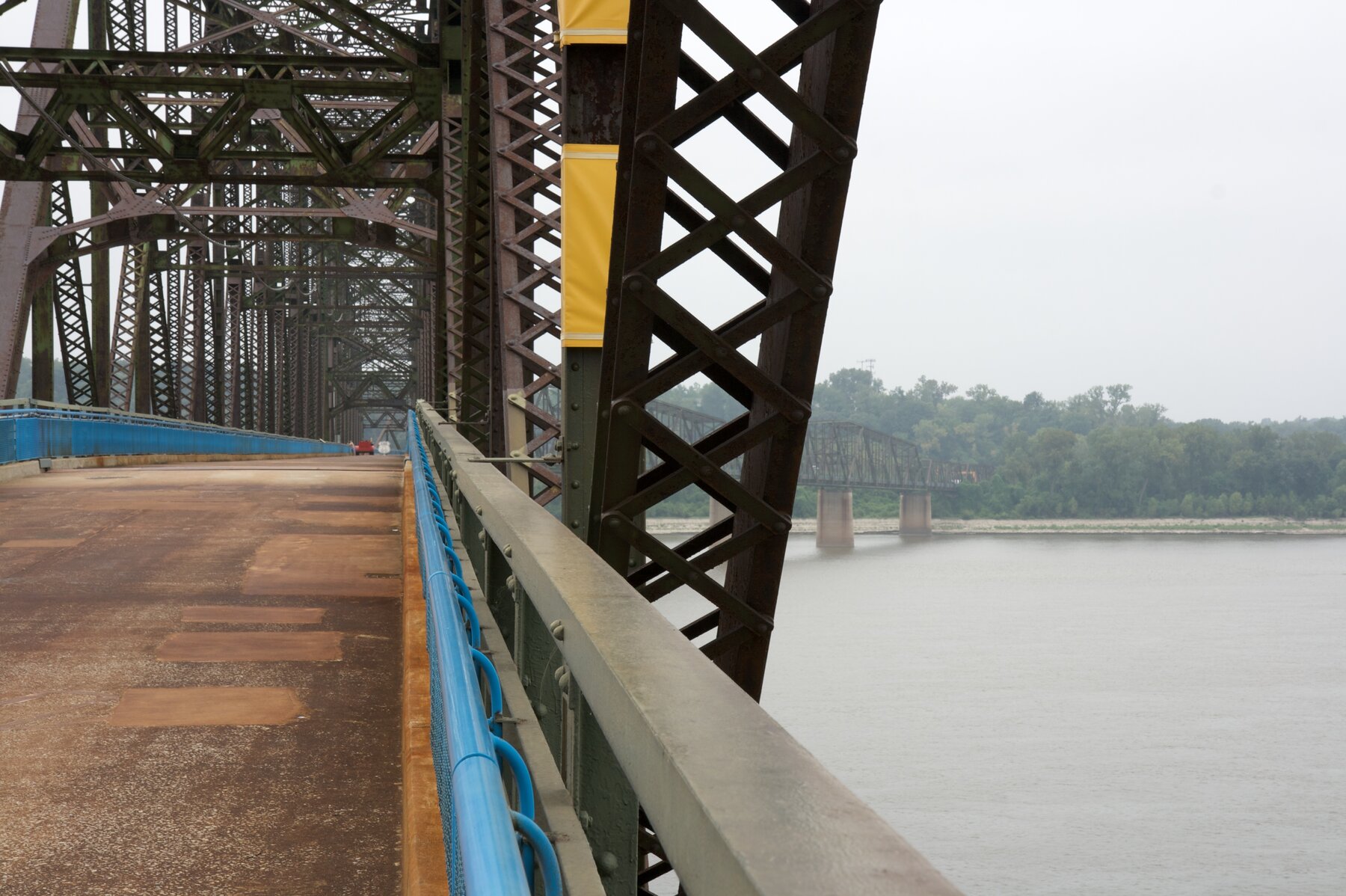
A former 17-mile rock-ledge rapids on the Mississippi River north of St. Louis, now tamed by a canal and dam and crossed by the historic Route 66 Chain of Rocks Bridge.
Despite its name, Chain of Rocks is not a scenic cascade but a roughly 17-mile stretch of rock ledges that once formed one of the most hazardous rapids on the Mississippi River, beginning just north of St. Louis. The reef endangered shipping badly enough that the U.S. Army Corps of Engineers built an 8.4-mile bypass canal in the late 1940s and early 1950s, along with the low-water Dam No. 27 and Lock No. 27, to tame the crossing. Since then the original rock ledges sit mostly submerged behind the dam, visible only in extreme low water.
The most visible legacy today is the Chain of Rocks Bridge, built in 1929 and known for a 22-degree bend partway across its mile-long span, added so riverboat pilots could avoid steering straight at the bridge's piers and water-intake towers. The bridge carried Route 66 traffic from the late 1930s until a new span opened in 1967, closed to vehicles in 1970, and reopened in 1999 as a pedestrian and bicycle crossing on the Route 66 Bikeway; it was listed on the National Register of Historic Places in 2006. There is no waterfall overlook here: visitors instead walk or bike the historic bridge, with Mississippi River views over the site of the old rapids.
Know before you go
Chain of Rocks Bridge / Route 66 Bikeway, north St. Louis, MO, crossing to Madison County, IL.
Open year-round; the historic rock ledges are visible only during extreme low water.
Chain of Rocks Bridge crossing is about 1 mile one-way, flat and paved, part of the Route 66 Bikeway/Riverfront Trail.
No fee to walk or bike the bridge.
Paved, flat multi-use path across the bridge; verify current trail connections before visiting.
2026-10-12. Conditions and requirements can change; confirm with the land manager before travelling.
Sources & further reading
This is a researched visitor guide, not a claim that our editors have personally visited. Trail conditions, permits, and access can change.